
.svg)

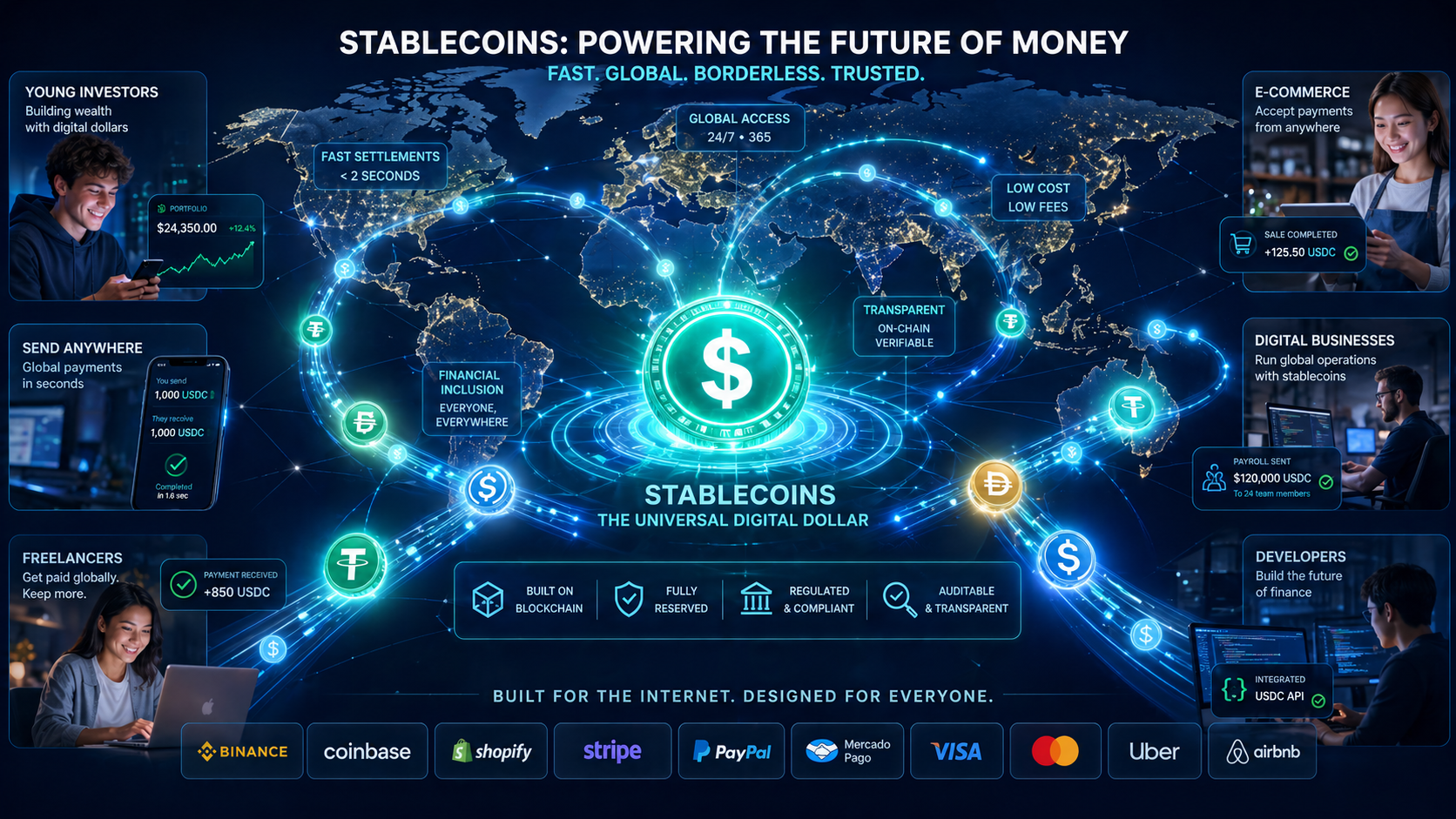
Stablecoins are starting to look less like a niche crypto product and more like a candidate for global financial infrastructure. A new forecast cited by CoinDesk says adjusted stablecoin transaction volume could climb to 719 trillion dollars by 2035 through organic growth alone. The projection comes from Chainalysis, which argues that the sector has already reached meaningful economic scale after processing about 28 trillion dollars in adjusted volume in 2025.
The report’s core argument is that adoption will be pushed by two large structural shifts happening at the same time. One is the multidecade transfer of wealth from older generations to Millennials and Gen Z, with Chainalysis estimating that roughly 100 trillion dollars could change hands between 2028 and 2048. These younger cohorts are described as far more likely to treat crypto-native rails as normal financial tools, which means the inheritance cycle itself could become a major adoption engine for stablecoin payments and settlement.
The second growth driver is real-world payments. Chainalysis argues that stablecoins are moving beyond trading and are beginning to compete with traditional payment rails in everyday business use, especially where speed, cross-border settlement and 24/7 transferability matter. Under that base-case trajectory, stablecoins keep compounding from current usage patterns into a much larger payments layer. In a more aggressive scenario that adds favorable macro catalysts and wider point-of-sale adoption, the report says volume could approach 1.5 quadrillion dollars by 2035.
What makes the forecast notable is not just the size of the number, but what it implies about competitive pressure on legacy finance. CoinDesk framed the outlook as a challenge to the dominance of incumbents like Visa and Mastercard, because stablecoins can already move value globally with fewer time constraints and potentially lower friction. That does not mean cards and banks disappear, but it does suggest the center of gravity in payments could shift if stablecoins become the preferred settlement layer for a new generation of users and businesses.
The broader takeaway is that stablecoins are increasingly being modeled as infrastructure rather than as a side product of crypto speculation. The forecast is still a projection, not a certainty, and it depends on regulation, user experience and merchant adoption improving over time. But the direction is clear: if younger capital, business payments and onchain settlement keep converging, stablecoins may grow into one of the most important financial rails of the next decade.





























































































.svg)
.svg)
.svg)
.svg)
.svg)
.svg)