
.svg)

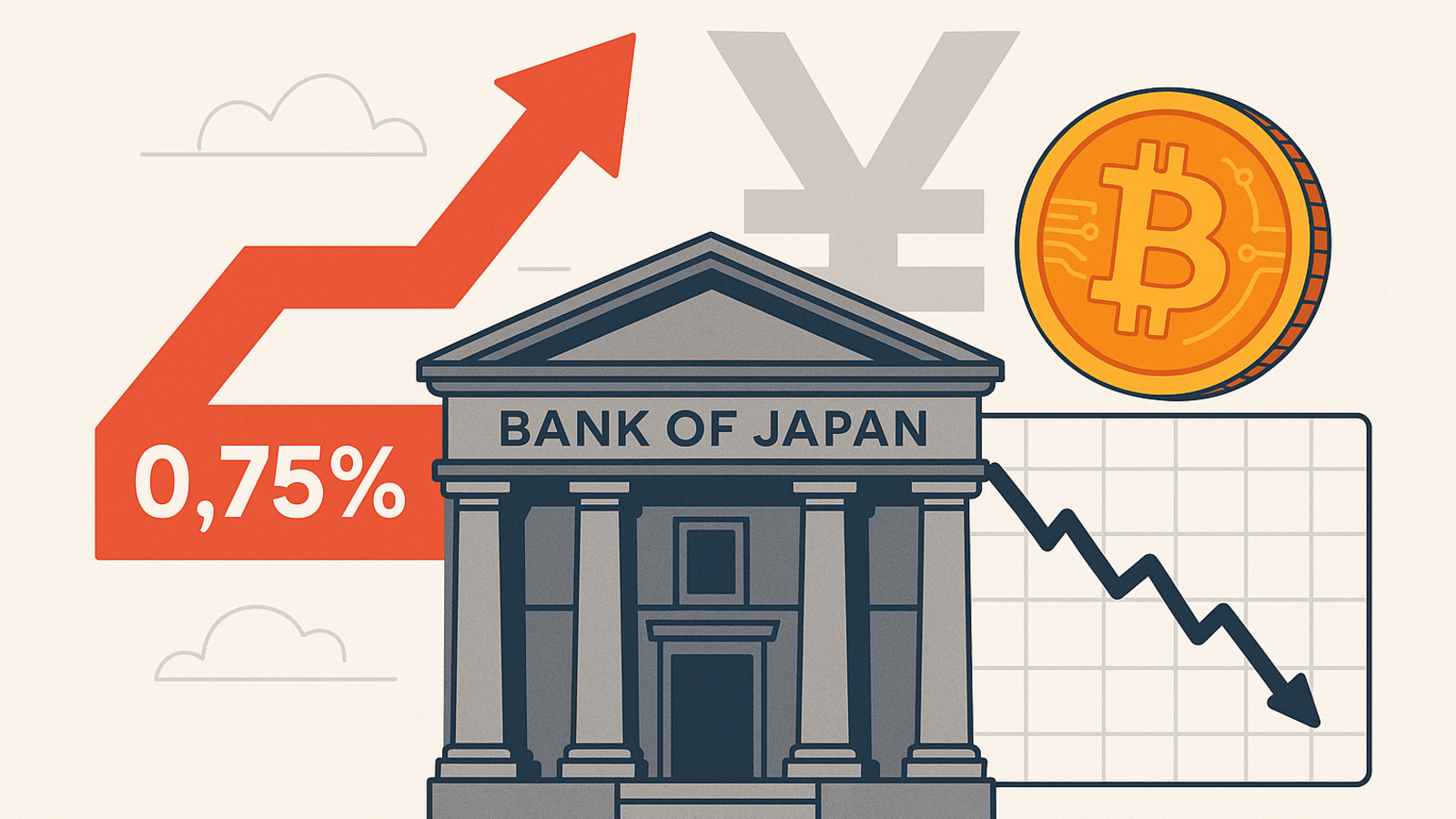
The Bank of Japan is expected to lift its policy rate by 25 basis points to 0.75 percent from 0.50 percent on December 19, which would mark the highest level for Japanese interest rates in roughly three decades. The move, flagged in advance by local reporting from Nikkei, would be the first tightening step since January and a clear break from the ultra loose stance that defined Japanese policy for years.
For bitcoin traders, the risk is less about Japan in isolation and more about what a stronger yen does to global liquidity. Historically, periods when the yen firms against the dollar have lined up with pressure on BTC, while a weaker yen often coincided with crypto rallies. The currency is currently trading near 156 per dollar, slightly stronger than its late November peak above 157. The last time the BOJ hiked, in July 2024, the yen jumped and a wave of risk aversion pushed bitcoin down from around 65,000 dollars to near 50,000 dollars in early August.
A key channel is the famous yen carry trade. For decades, hedge funds and bank desks borrowed yen at very low rates and used that funding to buy higher yielding assets such as United States tech stocks and Treasurys. When Japanese rates rise, that trade becomes less attractive and investors can be forced to unwind positions, which tends to weigh on equities and on crypto at the same time. In other words, a higher Japanese policy rate can pull some of the cheap fuel out of global risk markets, and bitcoin is highly sensitive to that shift.
The article also notes reasons why this hike might not trigger a full repeat of the 2024 shock. Speculators are already net long yen according to futures data, which means there is less crowded short positioning that can be squeezed on the way up. Japanese government bond yields have been grinding higher all year, so the rate move largely brings the official policy rate into line with what the market had already priced. At the same time, the United States Federal Reserve has just cut rates by 25 basis points and introduced extra liquidity measures, and the dollar index has slipped to a seven week low. Those cross currents lower the odds of a violent year end sell off driven by a sudden unwind of yen funded trades.
Even so, Japan’s fiscal backdrop hangs over the story. With public debt around 240 percent of gross domestic product, analysts at firms such as MacroHive warn that a mix of high debt, rising inflation and political pressure for tax cuts could eventually turn Japan from a perceived safe haven into a source of volatility if investors begin to question the credibility of the BOJ. For bitcoin and wider crypto markets, that means the December 19 decision is only one part of a longer narrative where Japanese policy, the yen and global risk appetite remain tightly linked.




















































































.svg)
.svg)
.svg)
.svg)
.svg)
.svg)