
.svg)


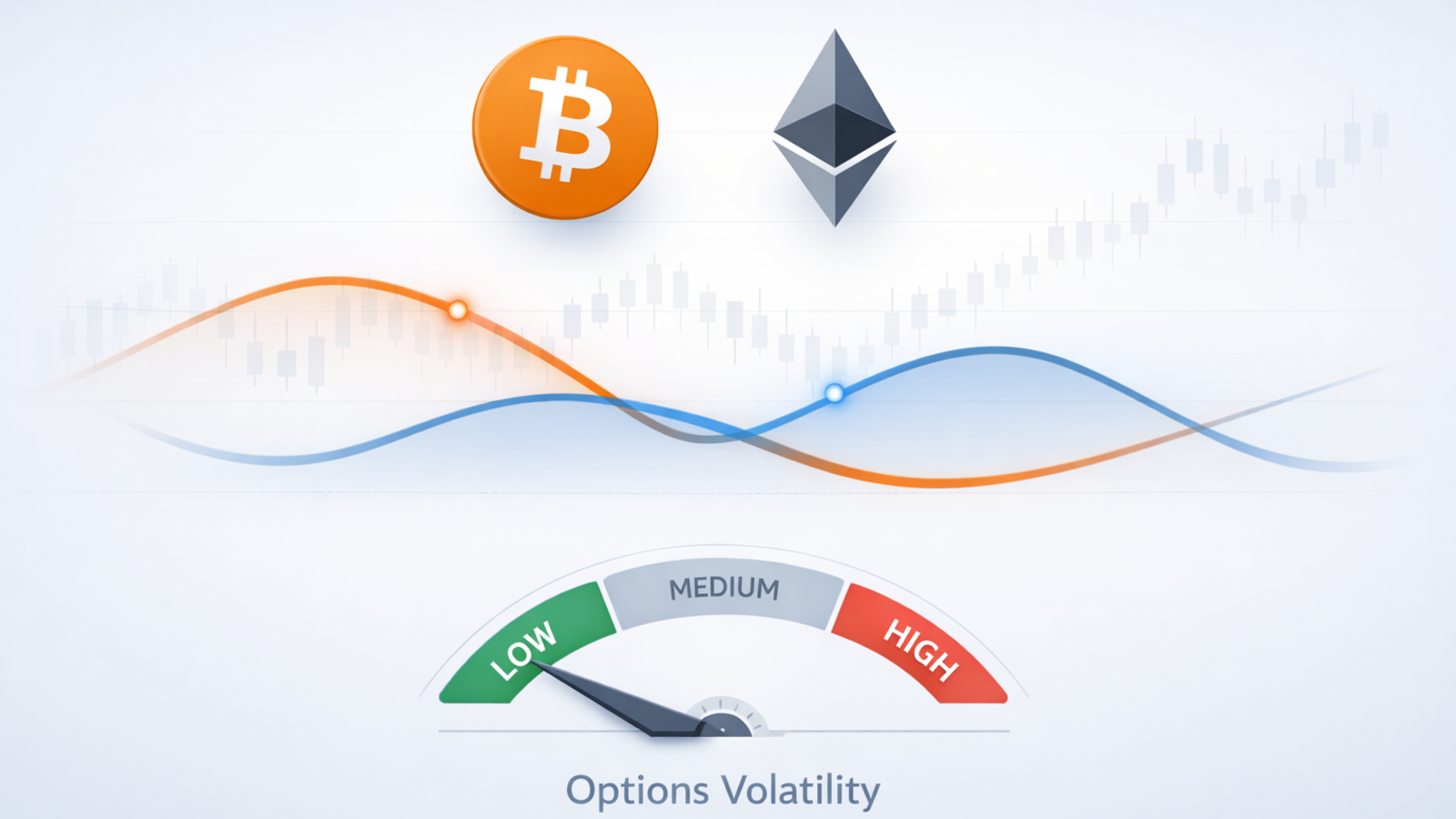
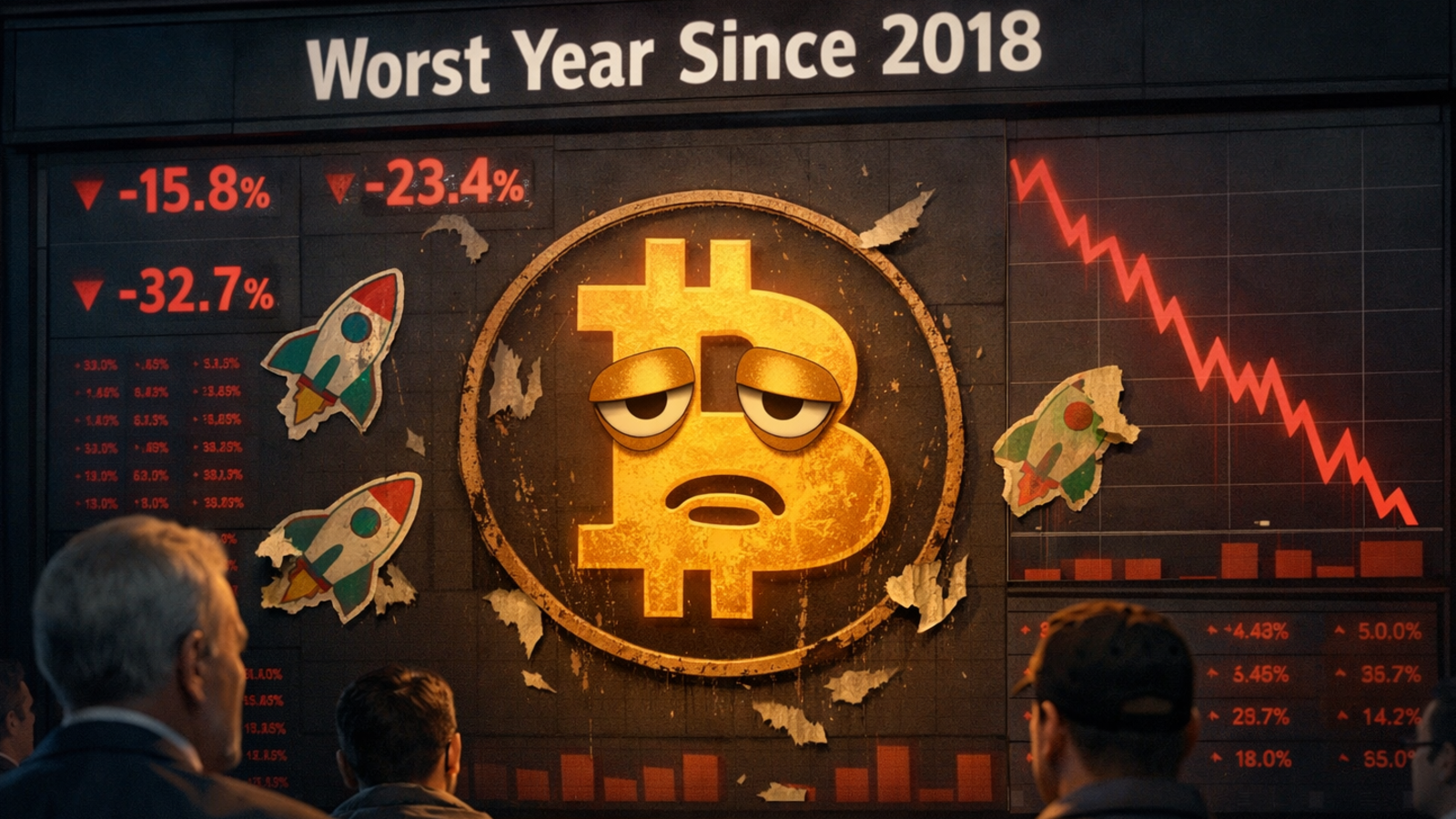
In 2025, bitcoin’s market lost much of its old chaos as big investors turned their spot and ETF holdings into yield machines. Measures of annualized 30 day implied volatility, such as Volmex’s BVIV and Deribit’s DVOL, started the year near 70% and are closing it around 45%, after touching a low near 35% in September. That steady grind lower shows traders expect smaller price swings over the coming month than they did a year ago and tracks directly with the way institutions are now using derivatives on top of their BTC positions.
The core trade is simple. Funds that hold large amounts of bitcoin, either directly or through spot ETFs, have spent much of the year selling out of the money call options on their stacks. These covered calls only pay out to buyers if BTC stages a strong rally above the strike price, so most of the time the option expires worthless and the seller keeps the upfront premium as extra income. Imran Lakha of Options Insights said on X that there has been a clear structural drop in implied volatility as more institutional money arrived and “was happy to harvest yield” by selling upside. Wintermute’s Jake Ostrovskis noted that more than 12.5% of all mined bitcoin now sits in ETFs and corporate treasuries that earn no native yield, which made call overwriting the dominant flow of 2025 and kept constant downward pressure on volatility.
Option selling has reshaped the market’s supply and demand balance. When many large players continually write calls, they flood the market with contracts that give others the right to buy bitcoin at higher prices, and that extra supply pushes option prices down. Because implied volatility is baked into option pricing, this process pulls vol lower almost mechanically. The setup suits long term holders with deep pockets. They are willing to cap some upside in exchange for steady income during quieter periods, and the more they repeat the trade, the more muted bitcoin’s forward looking volatility gauges become compared with past cycles.
At the same time, institutions have been paying up for downside protection. Throughout most of 2025, put options that hedge against price drops traded at a consistent premium to equivalent calls across both short and long expiries. That is the opposite of what bitcoin often showed in earlier years, when longer dated options usually leaned toward bullish call skew. Lakha argues this new pattern does not mean the market has turned bearish. Instead it signals that “real money is long and hedged” as professional investors keep core BTC exposure on the books while routinely buying puts to protect it. Together, the rise of covered call yield strategies and the preference for put hedges have pushed bitcoin’s options market toward a more traditional profile and helped turn 2025 into one of the calmest years the asset has seen in its history.
















































































.svg)
.svg)
.svg)
.svg)
.svg)
.svg)