
.svg)

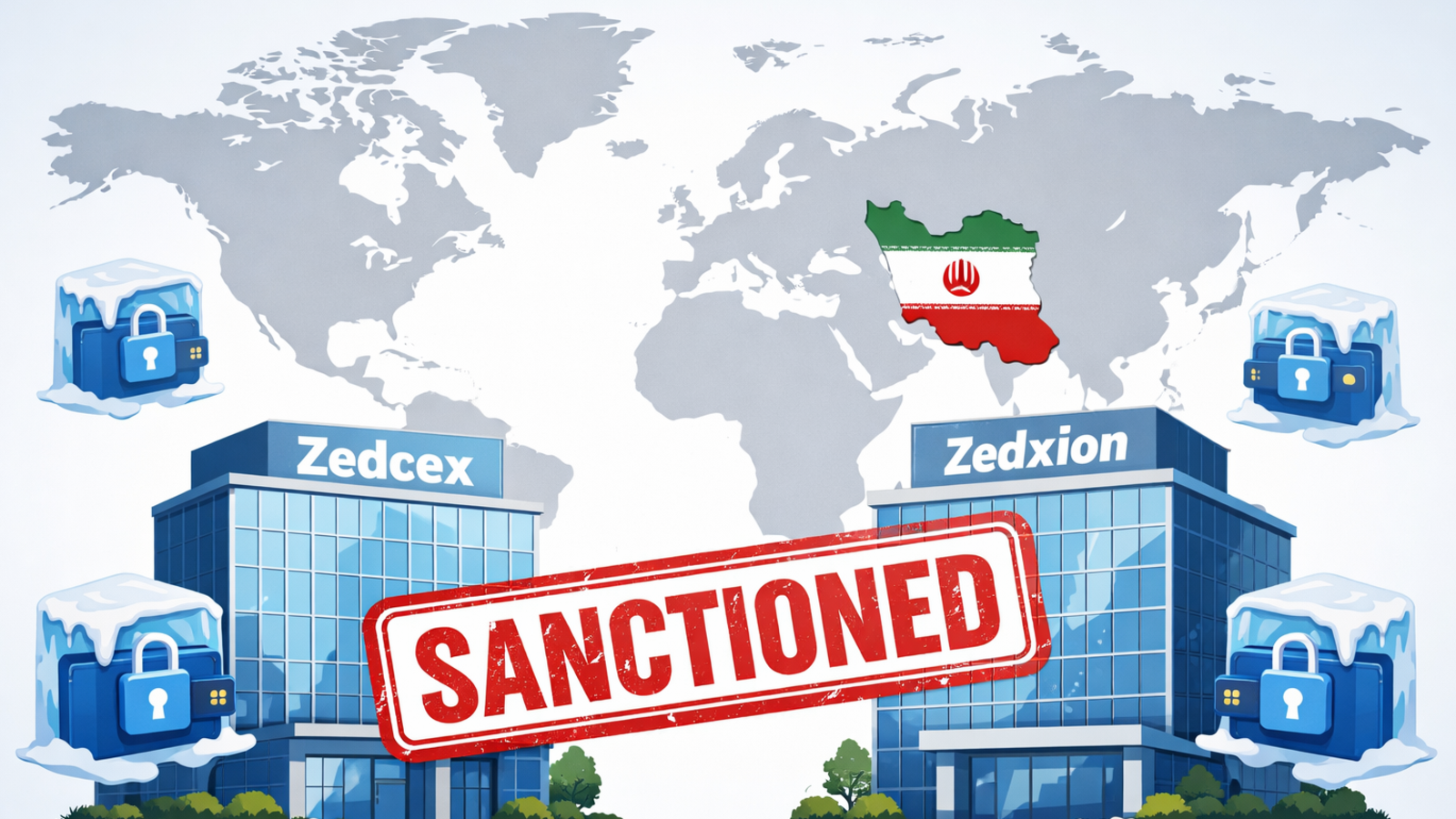
The U.S. Treasury Department has, for the first time, directly blacklisted cryptocurrency exchanges under its Iran sanctions program, marking a new phase in Washington’s effort to cut Tehran off from global finance. The Office of Foreign Assets Control (OFAC) designated U.K.-registered platforms Zedcex Exchange Ltd. and Zedxion Exchange Ltd. for operating in Iran’s financial sector and processing large volumes of crypto transactions tied to the country’s Islamic Revolutionary Guard Corps, or IRGC.
According to Treasury and independent blockchain analytics, the two exchanges helped channel roughly 1 billion dollars in stablecoin flows for IRGC-linked counterparties, mainly using USDT on the Tron network. OFAC’s action also swept up several associated wallet addresses, effectively cutting Zedcex and Zedxion off from compliant banks and crypto service providers worldwide. This is the first time digital asset platforms themselves have been designated for operating in the Iranian financial system, rather than just individual wallets or intermediaries.
U.S. officials say the designations are part of a wider crackdown on Iran’s “shadow banking” networks that use shell firms, exchanges and crypto rails to move money for sanctioned state entities. The exchanges are linked to Iranian businessman Babak Morteza Zanjani, a long-time sanctions evader who has been accused of helping the IRGC and other regime interests move billions of dollars in oil and financial proceeds. The latest measure coincides with new sanctions on Iranian officials blamed for violent crackdowns on protesters, underlining that human rights and security concerns are driving the push.
For the global crypto industry, the move is a clear warning that U.S. authorities are now prepared to treat exchanges themselves as core sanctions targets when they serve high-risk jurisdictions or state actors. Compliance experts say platforms that ignore red flags around Iranian flows face heightened risk of being cut off from the dollar system, not just fined or forced to settle. The action also signals that OFAC is shifting its focus from isolated wallet addresses to entire pieces of crypto infrastructure, especially when they appear to be purpose-built to facilitate sanctions evasion.





















































































.svg)
.svg)
.svg)
.svg)
.svg)
.svg)