
.svg)

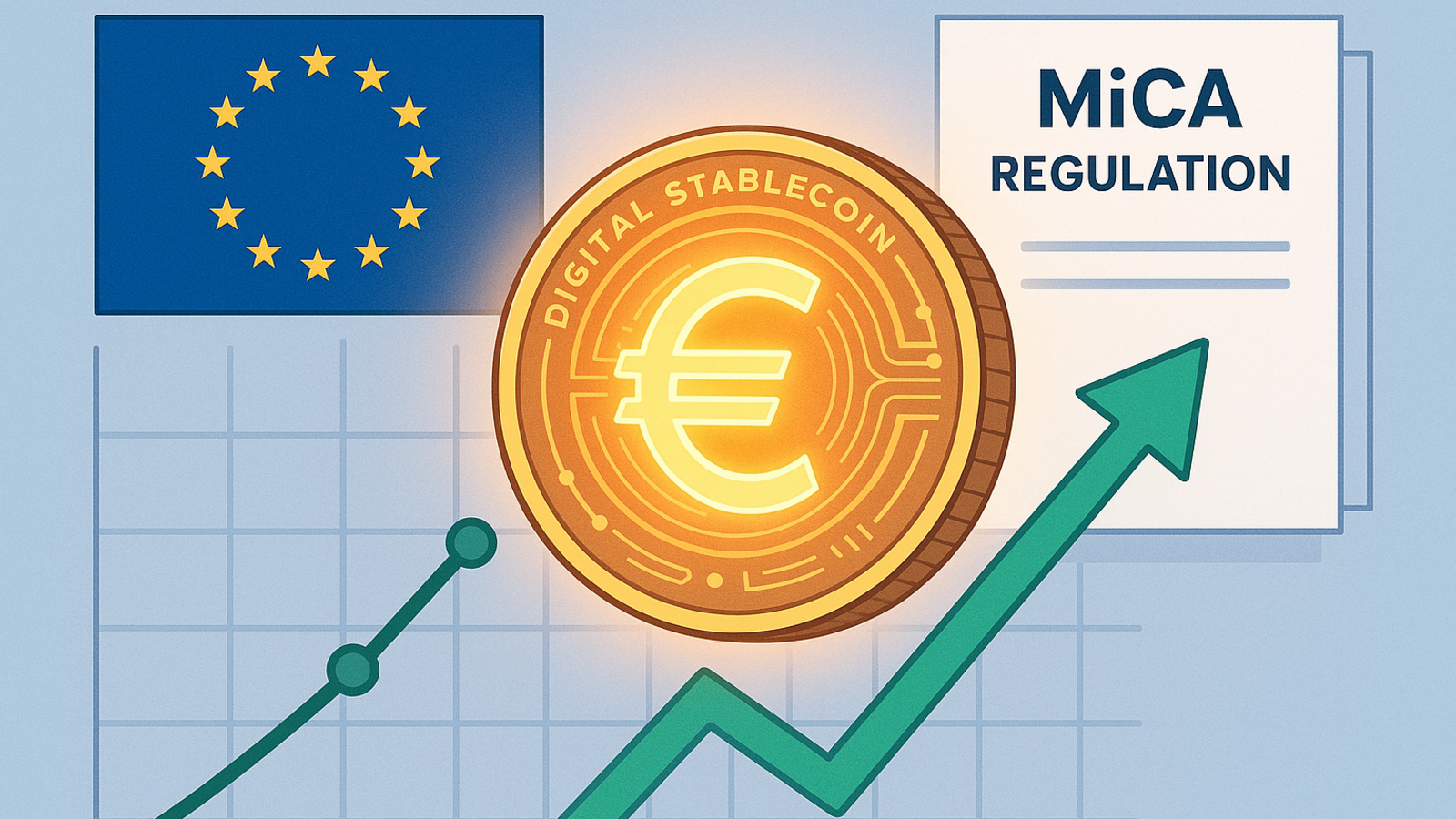
A new study from payments firm Decta says the euro stablecoin market has staged a sharp reversal in the year since the European Union’s MiCA rules came into force. In the twelve months after the regulation for asset referenced and e money tokens took effect in June 2024, the combined market cap of major euro pegged stablecoins jumped 102 percent, more than doubling after a 48 percent contraction in the previous year.
In dollar terms, outstanding euro stablecoins climbed to roughly 500 million dollars by May 2025 and have since pushed up to about 680 million dollars according to market data. That is still tiny compared with the roughly 300 billion dollars in dollar backed stablecoins, a segment led by Tether’s USDT with Circle’s USDC in second place, but the growth rate finally looks competitive instead of stagnant.
The rebound has not been evenly spread across tokens. EURS from Malta based issuer Stasis has been the standout, with capitalization rising about 644 percent from 38.2 million dollars to 283.9 million dollars between mid 2024 and October 2025. Circle’s euro coin EURC and Societe Generale’s EURCV have also logged strong gains, especially in transaction volumes, as more payment providers and trading venues add support.
Activity has picked up alongside market value. Decta’s report tracks aggregated monthly volumes for major euro stablecoins rising from around 383 million dollars before MiCA to roughly 3.8 billion dollars afterward, an increase of almost nine times. That suggests users are not only holding these tokens as a niche hedge but are starting to move real money through them for trading, payments and transfers across the bloc.
MiCA appears to be the main catalyst. The framework forces issuers to hold fully backed and liquid reserves, publish clearer disclosures and guarantee redemption rights, which removes some of the doubts that held back euro denominated tokens in past years. Regulators hope that this clarity, combined with initiatives like the new qivalis bank consortium that plans a euro stablecoin for European payments, will help Europe carve out more of the stablecoin market on its own terms instead of ceding the field to dollar products.



































































.svg)
.svg)
.svg)
.svg)
.svg)
.svg)